
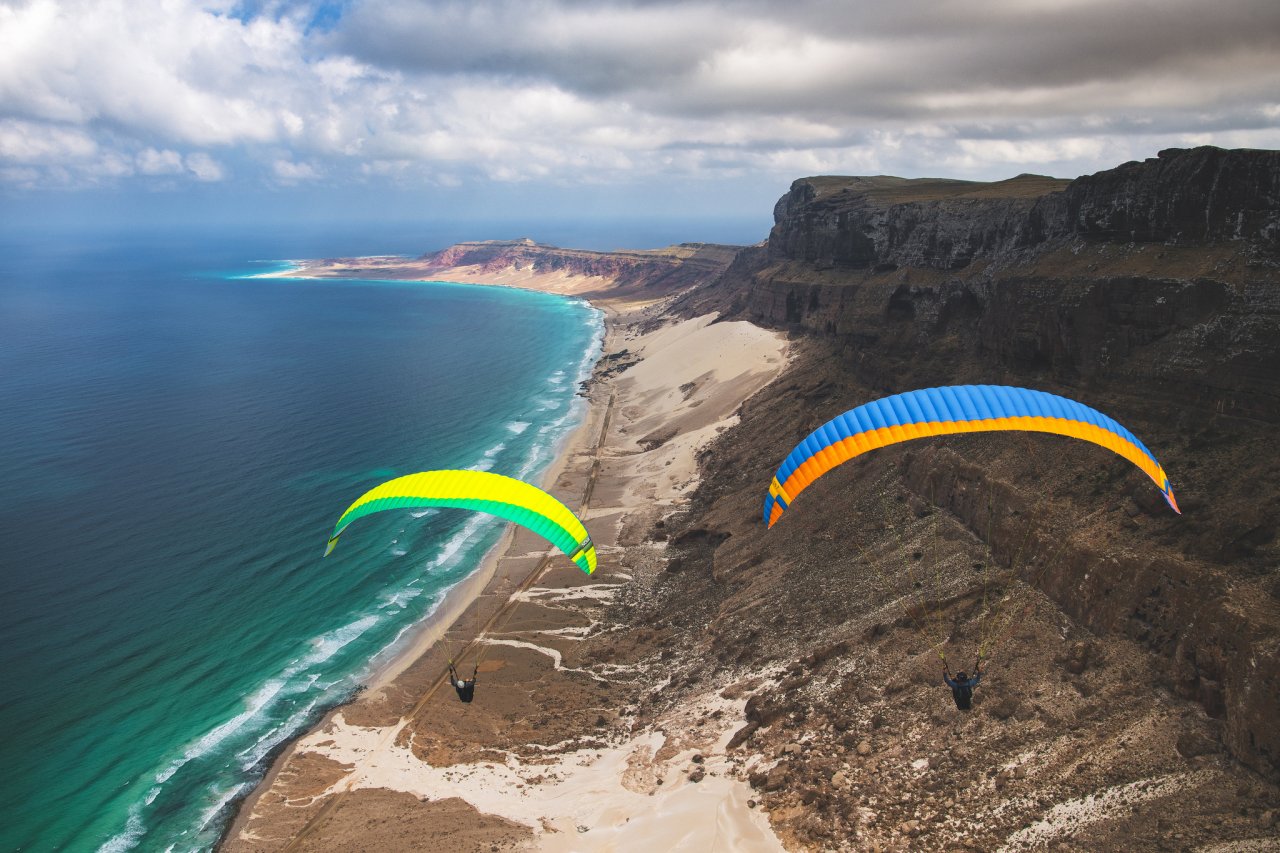
The NOVA ION 7 is an EN/LTF B certified intermediate paraglider that boasts versatility, safety, and performance for a wide range of pilots. Designed using NOVA's advanced simulation-driven software, this three-line wing offers a synthesis of solid construction, aerodynamic innovation, and user-friendly features that make it both trustworthy for newcomers and capable for progressing pilots.
Design and Construction
The ION 7 features a 51-cell wing with a flat aspect ratio of 5.17 and comes in sizes XXS to L. This range supports take-off weights from 55 to 130 kg, allowing pilots of various weights to find their ideal fit with precise sweet spots for handling and performance. The glider's weight ranges from 4.2 kg to 5.4 kg, emphasizing durability rather than minimalist weight savings.NOVA employs trusted Porcher/Skytex materials, including Skytex 38/40 for the leading edge and top surface and Skytex 40 Eazyfly on the bottom surface. The internal ribs use a rigid Skytex 40 Hard fabric that maintains profile stability even at higher speeds. Line selection balances low drag and longevity, combining Liros and Edelrid materials. Structural innovations such as Rod Loops and Mid Cell Links enhance shape retention and stability without increasing complexity or packing size.
Performance and Safety Features
NOVA emphasizes a "performance through stability" philosophy, with the ION 7 inheriting traits from the high-end MENTOR 7. The wing delivers high stability on the speed bar, excellent glide efficiency, and user-friendly speed system operation, making it suitable for efficient cross-country flights. Safety underpins the design, with collapse behaviors that induce minimal turn and height loss, thanks to simulation-based optimizations and a high tolerance to asymmetric collapses. This gentler collapse profile reduces stress and risk during maneuvers like SIV training.The wing's line layout simplifies handling by using only two galleries, reducing drag and easing ground management. Aerodynamic refinements such as double 3D shaping at the leading edge minimize fabric creases to preserve profile fidelity.
Handling and Pilot Experience
Test pilots and customers praise the ION 7 for its calm and composed handling during thermalling and active air, describing it as "easy to live with." The wing’s stable pitch response lessens pilot workload in turbulent conditions, appealing to those who value comfort during long flights. Launching is straightforward, with a clean and forgiving inflation even in light or crosswinds. The flare during landing is smooth and progressive, helping pilots complete their approaches confidently.While designed as an EN-B wing, the control is direct enough to support introductory freestyle maneuvers including SATs, wingovers, and helicopter stalls, thanks to its predictable uniform spanwise stall behavior. The brake travel is long, which enhances safety by reducing risks of accidental stalls.
Target Pilots and Versatility
The NOVA ION 7 suits a broad pilot audience. It is excellent for enthusiastic beginners progressing beyond their school wings, intermediate pilots focusing on comfortable and safe flying, and experienced pilots looking for a reliable single-wing quiver suitable for local soaring, hike-and-fly adventures, and moderate cross-country flights. The wing is also popular among paramotor users who appreciate its predictable behavior when flown within or slightly above free-flight certification limits.The optional XC riser adds pitch control for advanced pilots willing to manage a more complex setup, though it is not necessary for most ION 7 users.
Customer Feedback Synthesis
Pilot feedback consistently highlights exceptional passive safety, notably soft asymmetric collapses, and excellent stability on the bar. The wing’s handling in turbulent coastal and alpine environments is described as reassuring. Performance-wise, the glide and top speed are competitive within the EN-B class, making it a pleasurable wing for long glides. Its “one-wing quiver” character is repeatedly praised, supporting everything from first SIV courses to the entry-level freestyle.Criticisms are relatively minor, with some XC pilots noting the ION 7 is less aggressive than higher-end EN-Bs and may feel slightly damped in feedback compared to livelier wings. Others mention that the optional XC riser introduces some pre-flight complexity.
Conclusion
The NOVA ION 7 emerges as a highly capable, safe, and versatile intermediate paraglider. Its engineering prioritizes structural stability and benign reactions over pushing performance limits, making it an excellent choice for pilots valuing confidence and ease of use across a wide range of flying styles and conditions. Whether soaring locally, exploring cross-country routes, or learning new maneuvers, pilots will find the ION 7 a reliable partner offering "performance through stability."For more detailed information, visit the manufacturer's website. To order the NOVA ION 7 paraglider or other equipment, check availability at Paragliding.me.