
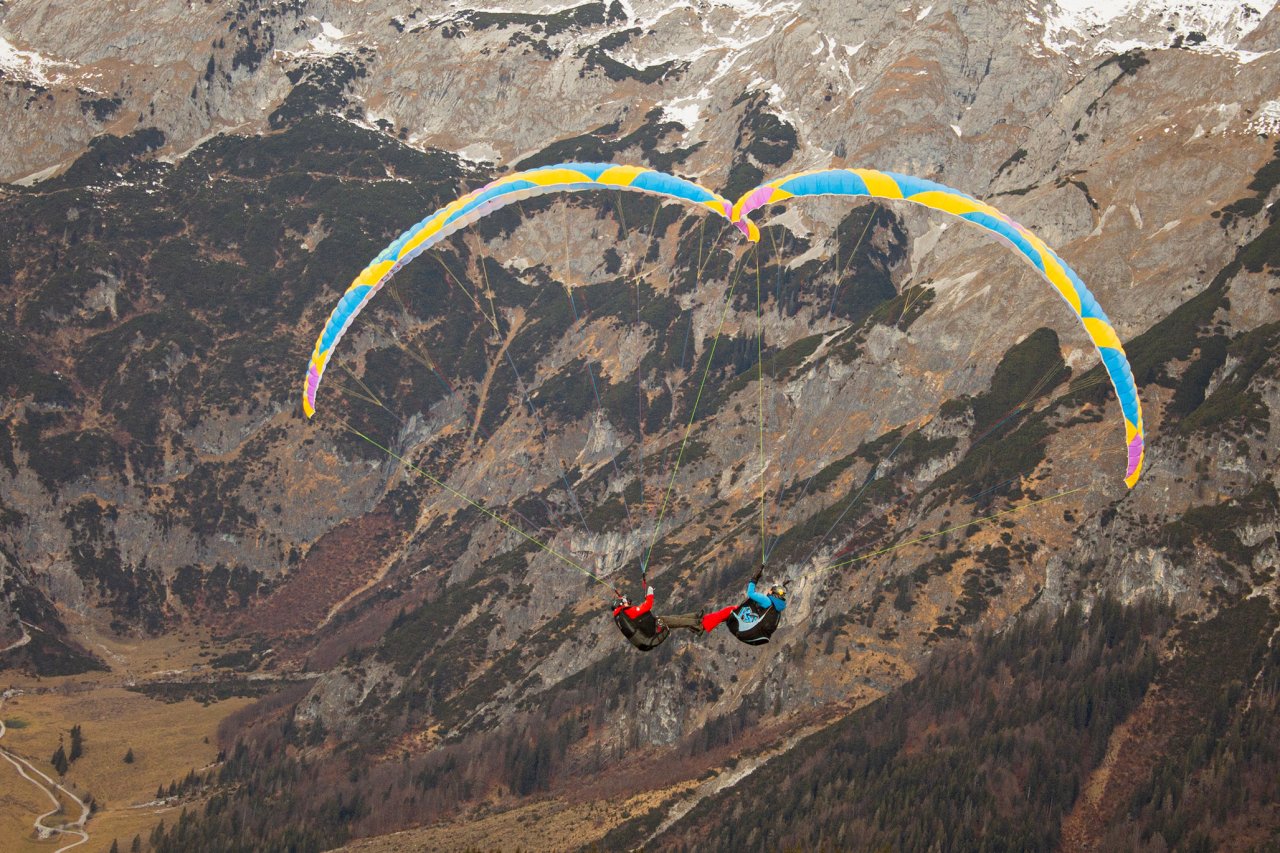
The Nikita XTC from ICARO is a paraglider meticulously engineered for the acro and freestyle flying community. Unlike cross-country (XC) or recreational wings, this glider is dedicated to performing advanced aerobatic maneuvers, including Dynamic Stall, Misty, Mactwist, Rhythmic SAT, and notably, helicopter connections and infinite tumbling. It boasts precise, immediate responsiveness to pilot inputs through its "soft brake pressure" design, minimizing pilot fatigue during intensive training or shows. Maintaining moderate internal pressure, it offers the handling feel of a paraglider rather than a rigid traction wing, striking a balance between performance and pilot feedback.
Target Pilot Profile and Usage Context
The Nikita XTC is tailored for experienced pilots with a solid foundation in EN-B class wings and mastery of basic SIV and acro maneuvers such as stalls, spins, and SATs. It is unsuitable for beginners or pilots new to acro, given its demanding nature. The wing loading plays a crucial role in flight characteristics:
- Below 4.6 kg/m² is ideal for learning acro maneuvers.
- A range between 4.6 and 5.6 kg/m² suits pilots consolidating and refining their acro skills.
- Above 5.6 kg/m² configures the wing for competition use with high-energy performance.
Design Features and Technical Specifications
The Nikita XTC features a flat aspect ratio of 5.7 and a projected aspect ratio of 4.2 across four available sizes (17, 18, 20, 22.5 m² flat area). Its projected surface areas range from 14.4 to 18.7 m², with span widths from 9.9 to 11.1 meters. Constructed using Skytex 38 cloth, the wing utilizes 50 cells with a 2-cell-bridge and 3-cell V-tape layout, deliberately omitting mini-ribs for acro-specific profile control. The wing weight varies between 4.9 and 5.8 kg depending on size. Its riser system is fully adjustable, featuring free brakes and pulleys, and includes a speed system with 180 mm travel; trimmers are absent to preserve pure acro responsiveness. The wing is single-seat, delivered with comprehensive accessories including a packing belt, inner bag, riser bag, tire repair kit, and fast bag.
Handling Characteristics and Flight Performance
Handling the Nikita XTC necessitates active, precise control and timing. Pilots often praise its crisp, direct brake response once appropriately loaded, which facilitates advanced maneuvers. The wing exhibits high energy retention in dynamic moves such as SATs, helicos, tumbling progressions, and wingovers, distinguishing it for proficient freestyle flying and competition. Its internal pressure feels solid and well-balanced, providing the necessary support during aggressive acro flight.
Launches demand readiness and technique: the wing inflates crisply with less forgiveness than beginner wings, requiring confident handling to manage the surge. Ground handling is stable enough for kiting practice, yet the wing reacts quickly to brake and weight shifts, reflecting pilot skill fidelity. Takeoffs need deliberate and timely action as the wing offers no leniency for hesitation.
In-flight, the Nikita XTC is stable and cuts through turbulence efficiently, a consequence of higher wing loadings. However, when collapses occur, the recovery time exceeds that of conventional paragliders, especially in turbulent wake or near-ground scenarios—pilots must remain vigilant. Spiral dives have a high descent rate and require substantial pilot input to exit safely. Landings also require refined technique, with limited flare margin and a rapid last-phase dive.
Safety Considerations and Certification
The Nikita XTC is explicitly designed as an acro tool with minimal passive safety features. Consequently, it does not possess EN flight certification but has undergone strength testing to EN load standards. Integrating full EN homologation was deemed incompatible with the wing’s purpose—to respond faithfully to aggressive maneuver inputs without automatic correction. Novice acro pilots, even those qualified, are urged to perform initial maneuvers under radio supervision, with heightened caution advised during spirals, full stalls, and spins.
Notable is the wing's "pre-loading" requirement; new wings demand 20 to 50 vertical tumbles or multiple SATs on both sides to condition materials for intended flight behavior. Unconditioned wings display a faster, more aggressive flight character, which can be challenging. Due to its dedicated acro design, pilots should maintain high standards of gear selection, including robust harnesses and reserve parachutes fitted for acro practice.
Pilot Community Feedback and Comparative Insights
Experienced acro and freestyle pilots consistently regard the Nikita XTC as a highly capable and powerful wing fit for competition and intense training rather than casual flying or XC. Reviews highlight:
- Strengths: its precise brake response, outstanding energy retention for complex acro maneuvers, solid internal pressure, and robust construction ensuring durability for demanding use.
- Challenges: a narrow "happy window" for pilot weight and brake input, demanding timing and active piloting, limited versatility outside pure acro, and a less forgiving launch and landing profile compared to leisure wings.
Build Quality and Durability
Feedback emphasizes the glider’s robust build, with strong lines and durable Skytex fabric suited for repeated intensive acro maneuvers, tow launches, and water-based SIV practice. The wing exhibits a heavier and bulkier profile than ultralight XC wings, a trade-off embraced by its target audience in favor of longevity and structural integrity. Stitching quality and finishing details support extended use under high dynamic loads, contributing to consistent performance retention over time.
Summary and Conclusion
The Nikita XTC by ICARO stands out as a top-tier pure acro paraglider, designed without compromise for serious aerobatic pilots. Its precision, energy, and specialized handling make it an exceptional tool for advanced acro training and competition. However, its demanding nature, minimal passive safety, and requirement for pilot skill and pre-conditioning restrict its suitability to skilled, well-prepared pilots. Those seeking a versatile or beginner-friendly wing should consider alternative options, while acro experts will find the Nikita XTC a worthy progression in the acro wing lineage.
For more detailed specifications, pilot guidance, and to order the Nikita XTC, please visit the manufacturer's website and explore equipment availability through Paragliding.me.