
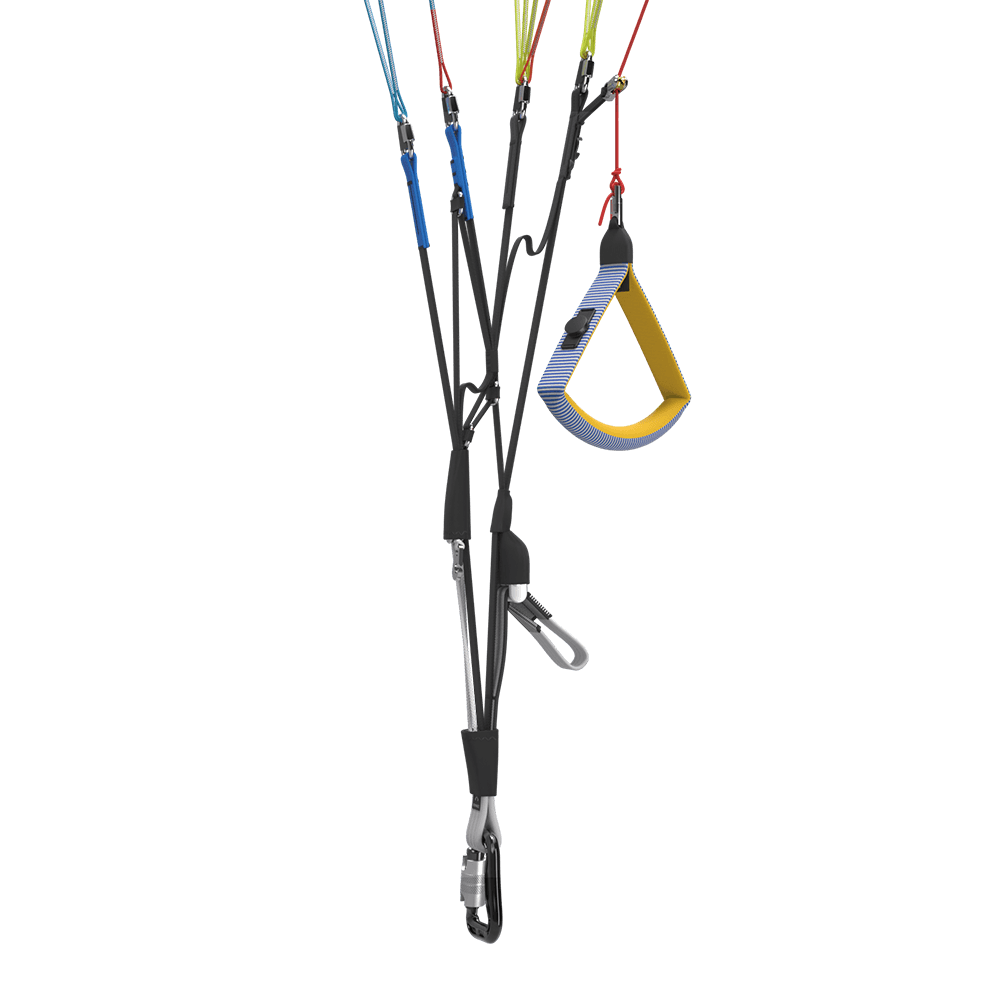
The Advance EPSILON DLS paramotor risers represent a dedicated accessory uniquely engineered to optimize the EPSILON DLS paraglider for powered as well as unpowered flight. These hybrid risers feature integrated trimmers that afford pilots precise control to counteract engine torque and adjust cruising speed seamlessly during paramotor use. Designed to maintain the wing’s certified safety and handling characteristics, these risers enable pilots to effortlessly switch between free-flight and paramotor configurations without compromising the wing's EN/LTF certification standards.
Paramotor Risers and Their Adapted Design
Specifically tailored to the EPSILON DLS wing, the paramotor risers incorporate trimmers that can be engaged or stowed depending on flight mode. For free flight, the trimmers are safely hooked and locked onto the carabiners, preserving the wing’s certified mountain-flight certification and allowing for speed control via the built-in foot accelerator speed bar. During powered flight, these trimmers permit compensating for engine torque, providing enhanced stability and fine-tuned speed management. The risers are DGAC certified for paramotor flight in five sizes, accommodating a broad range of takeoff weights from 55 to 205 kg, rendered via different size options to suit pilot needs.
Customer Insights on Riser Usability and Wing Performance
Ergonomics and Riser Handling
Although detailed user reviews focused solely on the paramotor risers are limited due to the relative novelty of the setup, feedback on related riser configurations is insightful. A detailed assessment highlights the risers’ lightweight construction and quality build, praised for enabling playful maneuvers like wingovers while maintaining comfort and control. However, pilots note a somewhat tight spacing between A and B risers which can pose challenges when handling with thick gloves, particularly in colder conditions. Since paramotor risers are typically bulkier, this ergonomic consideration is significant for paramotor pilots who rely on quick and clean riser grabs during launch and flight.
Weight Considerations
The availability of lighter riser options for the EPSILON DLS indicates that the paramotor risers will generally be the heaviest of the configurations due to their additional components like trimmers and reinforcements. This added weight, while modest, will be felt at the shoulders but does not detract from the overall lightweight nature of the EPSILON DLS wing, preserving portability and ease of transport even when set up for powered flight.
Wing Characteristics Favorable for Paramotor Use
Users consistently commend the EPSILON DLS for its predictable and stable inflation behaviour, which translates well into the powered flight domain. The wing’s strong directional and roll stability, combined with well-damped feedback and turbulence resistance, provides a safe, comfortable flying experience that inspires confidence, especially for transitioning pilots. These qualities are essential when dealing with the additional forces and torque introduced by paramotors, making the EPSILON DLS a versatile intermediate wing for both free flight enthusiasts and paramotor pilots.
Strengths for Powered Flight Application
- Take-off and Ground Handling: Pilot reports emphasize the ease of inflation and smooth wing rise, crucial for managing powered launch sequences safely and efficiently.
- Comfort and Safety: The wing’s calm, predictable nature fosters a secure flying environment, helping pilots remain composed under power.
- Handling and Maneuverability: The EPSILON DLS allows for playful yet precise control inputs, enabling enjoyable and responsive turns even under motor thrust.
- Weight and Portability: Its lightness and compact packing make it ideal for hike-and-fly paramotor operations or remote landings.
- Multi-purpose Versatility: It serves well in free flight and powered configurations, emphasizing a smooth transition with minimal setup changes.
Considerations and Potential Limitations
While the EPSILON DLS paramotor risers hold promise, potential users should be mindful of a few caveats. The noted tight riser spacing may demand adjustments in handling style, especially in cold weather with gloves. The scarcity of extended paramotor-specific user reviews means durability and trimmer performance under heavy use remain to be fully verified in the field. Additionally, as an intermediate EN-B wing, pilots moving up from beginner-level school wings should anticipate increased responsiveness while those accustomed to highly reflexive paramotor wings might find it comparatively calmer and more paraglider-like.
Conclusion: A Reliable Choice for Intermediate Paramotor Pilots
Synthesis of manufacturer details and user feedback portrays the Advance EPSILON DLS paramotor risers as a thoughtful and expertly engineered solution for pilots seeking a single wing capable of both free and powered flight. Its combination of robust construction, integrated trimmers, and preservation of certified safety standards positions it as a confidence-inspiring platform. Pilots are encouraged to test the rig firsthand, assessing riser ergonomics with their equipment, and experiencing the wing’s behaviour across power settings. Overall, the EPSILON DLS with paramotor risers appears well-suited for intermediate pilots desiring versatility, manageable handling, and a trusted wing that supports their flight ambitions.
For more information about the Paramotor risers EPSILON DLS, please visit the manufacturer's website, and order your advanced paramotor equipment at Paragliding.me.