
The page makes Montenegro readable for foreign pilots without hiding that paragliding is regulated aviation.
Before flying: documents, airspace and the site
Montenegro can be welcoming for prepared pilots, but it is still an aviation environment.
Before treating a launch as usable, a visiting pilot needs to think through:
- valid licence, IPPI/APPI evidence, or other relevant pilot documents
- privileges that match the intended flight type
- medical, rating, or supervision requirements where relevant
- equipment condition and required safety equipment
- current weather and flying-area suitability
- airspace, NOTAM, AUP, controlled-airspace, and temporary restriction checks
- whether the activity is private flying, tandem, training, group flying, motor, acro, or another format with extra coordination needs
That may feel heavier than a destination intro, and that is the point. It is the part that helps responsible pilots approach Montenegro without guessing.
- 1 Confirm documents Licence, IPPI/APPI evidence, rating, medical or insurance status where relevant.
- 2 Name the flight type Private solo, tandem, student, group, motor, acro, and event-style activity do not carry the same requirements.
- 3 Check current airspace Check CAA, AIS/AIP, NOTAM, AUP, ATS, and briefing routes. Treat OpenAIP as orientation, not permission.
- 4 Read the flying area locally Weather, access, launch, landing, terrain, retrieve, and local-use context still shape the real decision.
- 5 Stop or continue No valid qualification, missing approval, unsafe weather, or unsuitable equipment is a hard stop.
Decision order, not a permission checklist: public orientation can help you ask better questions, but it cannot authorize a flight.
Qualifications and documents
A visiting pilot should be ready to show or confirm the documents and privileges that match the planned activity.
Depending on flight type, that can include:
- a valid paragliding licence or recognized pilot identification
- IPPI/APPI evidence where relevant
- the correct rating for tandem, motor, acro, instruction, or other non-basic activity
- medical certificate where required
- insurance status
- evidence that student, instructional, tandem, or organized activity is handled in the proper context
Personal confidence is not the same as valid privilege. Document and rating questions belong before the launch decision, not after it.
Current airspace information
Airspace cannot be reduced to one permanent paragraph.
At first-step level, keep the boundaries clear:
- paraglider activity is framed around VFR daytime flying
- controlled-airspace plans need a current check for prior approval, radio communication, and the appropriate air traffic services unit
- temporary restrictions can change through NOTAM and AUP information
- organized use of take-off and landing sites for tandem, training, air shows, or competitions can require prior CAA approval
- official AIS/AIP, NOTAM, AUP, CAA, ATS, and current local briefing information should sit above old screenshots, old forum advice, or one remembered tracklog
OpenAIP can help as a visual orientation aid, but it is not flight permission by itself.
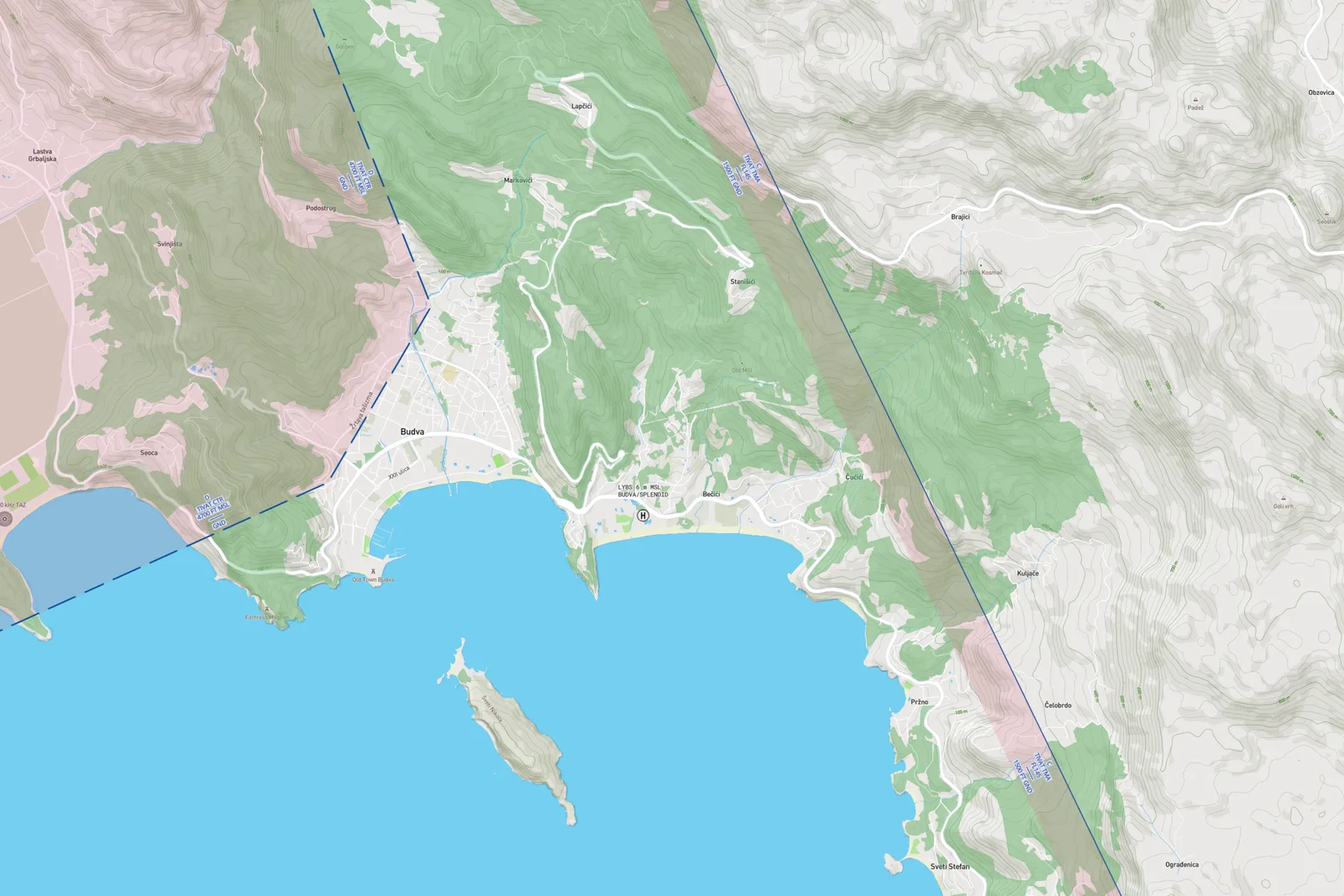
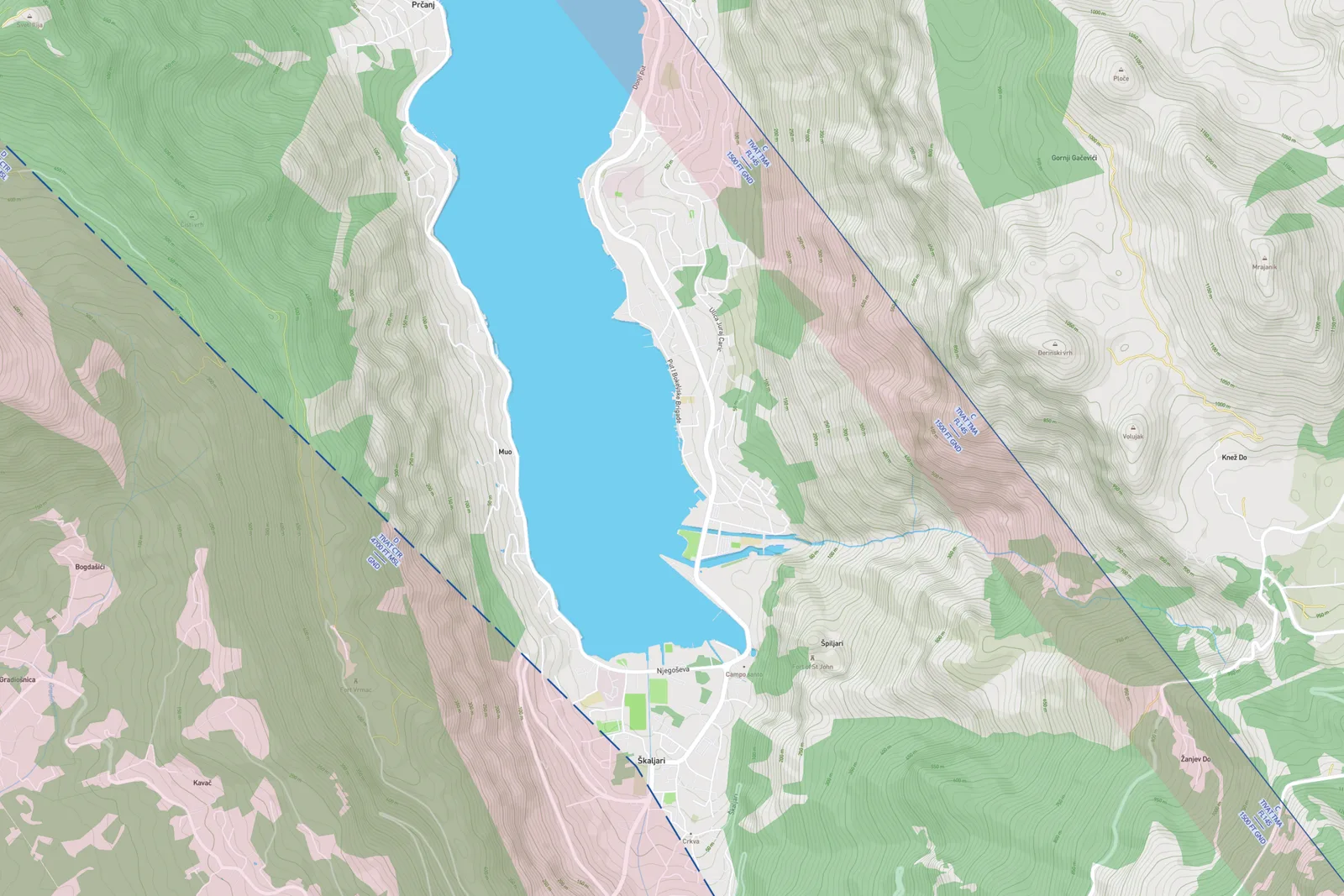
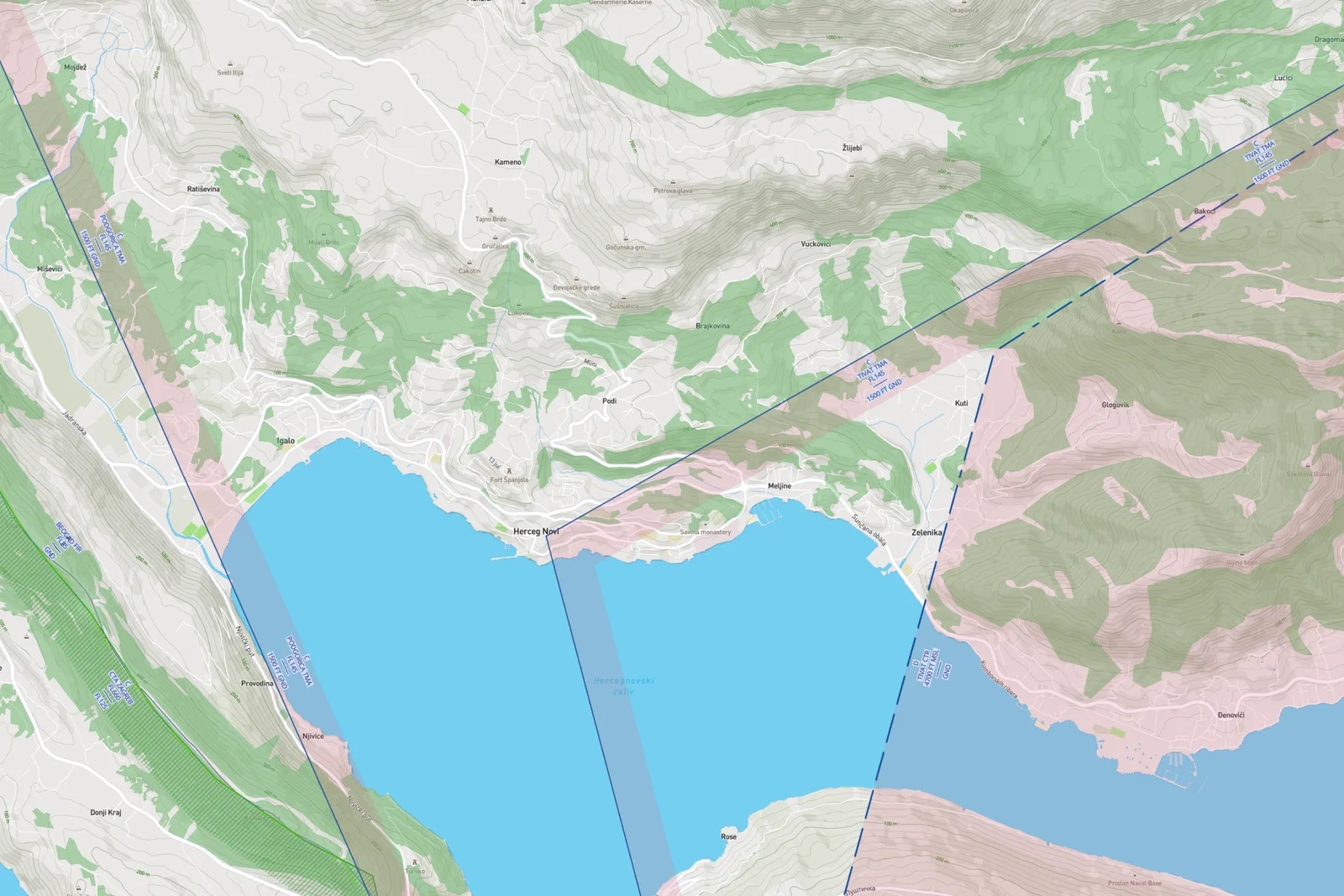
Three places where the airspace map matters
Some Montenegro flying-area notes need a more careful airspace and terrain read before a pilot treats them as simple.
| Flying-area note | Why it is sensitive | Shared TMA reading |
|---|---|---|
| Budva / Brajići | The coastal ridge and Budva / Bečići corridor sit close enough to aerodrome-zone geometry that the intended line needs a map check before the area feels straightforward. | TMA, upper FL145, lower 1500 ft GND |
| Kotor / Zanjev Do | Bay terrain, steep relief, and Tivat-side airspace make this a rules-and-approval case before it is a scenic flying-area decision. | TMA, upper FL145, lower 1500 ft GND |
| Herceg-Novi / Dizdarica | The Bay / Orjen-side context needs a map check of terrain, route, and airspace edges before local weather and briefing decisions are made. | TMA, upper FL145, lower 1500 ft GND |
These maps are orientation aids; they do not create permission.
Different activities, different requirements
A private solo flight, a tandem flight with a participant, student activity, a group visit, motor flying, acro, and a competition-style event do not carry the same responsibility pattern.
Tandem activity in particular is not simply “a pilot taking a guest.” It can involve the pilot’s tandem privileges, participant briefing, insurance information, emergency procedure information, participant declaration, and a current assessment that the activity is appropriate.
Training and group activity can also change the approval and coordination question.
Start from the category frame to understand the activity type. Official sources, local briefing, and current local process still settle the real plan.
For the distinction between solo flying, private non-commercial tandem, NVO demonstration, and commercial tandem, use the legal map. It is a source map, not a flight-permission channel.
What a local briefing can clarify
Local support can help a responsible pilot turn a vague plan into a clearer question before it becomes a launch-day problem.
It may help with:
- checking whether documents and ratings seem to match the planned activity
- identifying whether CAA, ATS, airspace, or site-use questions may exist
- separating ordinary local briefing needs from harder approval issues
- checking current source routes before relying on old information
- deciding whether the next step is pilot services, education, technical support, or a better site choice
Some issues remain hard stops until genuinely resolved: no valid qualification, missing rating, unsafe weather, unsuitable equipment, missing required approval, or a plan that does not fit the site or airspace.
Source review and limits
Reviewed as a public first-step orientation layer, not as a complete legal manual or a live approval channel.
It points readers toward the Civil Aviation Agency of Montenegro, SMATSA AIS / AUP information, OpenAIP as a visual orientation aid, and current local briefing context. Last official-source route check: 5 October 2026. Next freshness review: 12 October 2026.
Official information to check
Start with these source routes, then follow the current official links inside them:
- Civil Aviation Agency of Montenegro legislation page
- CAA reminder to follow paraglider regulations
- SMATSA AIS information
- SMATSA airspace use plan information
- OpenAIP Montenegro map view
Read those routes by role: CAA is the regulation source, SMATSA AIS explains AIP, NOTAM, PIB, and VFR AIP routes, SMATSA AUP is time-sensitive airspace-use planning information, and OpenAIP is a visual orientation aid only.
Where to continue
Continue to Pilot Services when the rules and airspace frame is clear enough that the next question is practical support.
Continue to Paragliding Sites when the place-pattern question is still not settled.
Continue to Paragliding Education when Montenegro already fits as a pilot context and the remaining question is training.
Why this helps
It separates ordinary pre-flight clarity from hard limits that cannot be solved at launch.
It introduces local briefing and permit-support help as a practical route, not a promise to override official rules.
Last reviewed: October 5, 2026 · Review status: Next review scheduled
- Last reviewed
- Review due by
Quick answers
Quick answers
Is this a complete legal manual for paragliding in Montenegro?
No. It is a first-step public orientation layer. Current CAA rules, AIP, NOTAM, AUP, ATS information, and live local briefing context sit above this summary. The narrower source map is in the [legal map](/paragliding-law-montenegro/).
Can foreign pilots fly in Montenegro?
Foreign pilots may be able to fly, but not by treating the country as open sky. Visiting pilots need valid licence or IPPI/APPI evidence, suitable privileges, suitable equipment, and current checks before launch.
Can local briefing help with permits or unclear requirements?
Local briefing support can help check documents, identify whether CAA or ATS approval may be relevant, arrange a briefing route, and spot unresolved issues early. It cannot erase invalid documents, unsafe weather, unsuitable equipment, or missing mandatory approval.
Does this make local briefings unnecessary?
No. It makes local briefings more useful by helping you arrive with better questions and a clearer idea of what needs current confirmation.
Is Montenegro too complicated for visiting pilots?
No. The message is that Montenegro is a serious flying environment where preparation, current information, and local coordination make the country easier to approach responsibly.
Does OpenAIP replace official NOTAM, AUP, AIS, or ATS checks?
No. OpenAIP can be useful as a visual orientation aid, but current official sources and local briefing context still decide whether an airspace reading is usable for a real flight plan.
Continue in this guide
Choose the next page
Paragliding sites in MontenegroStart there if the place-pattern reading still needs to come before deeper rules and airspace detail.Pilot orientation in MontenegroStep back there when the wider visiting-pilot frame is still not fully settled.Pilot services in MontenegroContinue there when the real question becomes document checks, permit-support routing, briefings, retrieves, weather consultation, group support, or local coordination.Paragliding education in MontenegroContinue there when Montenegro already fits as a pilot context and the next question becomes a narrower training path.
Specialist guides
Continue with the guide that fits your next question
These links open specialist guides for a place, scenic mood, or wider context. paragliding.me keeps the country-level answer and points you onward once the question becomes more specific.