

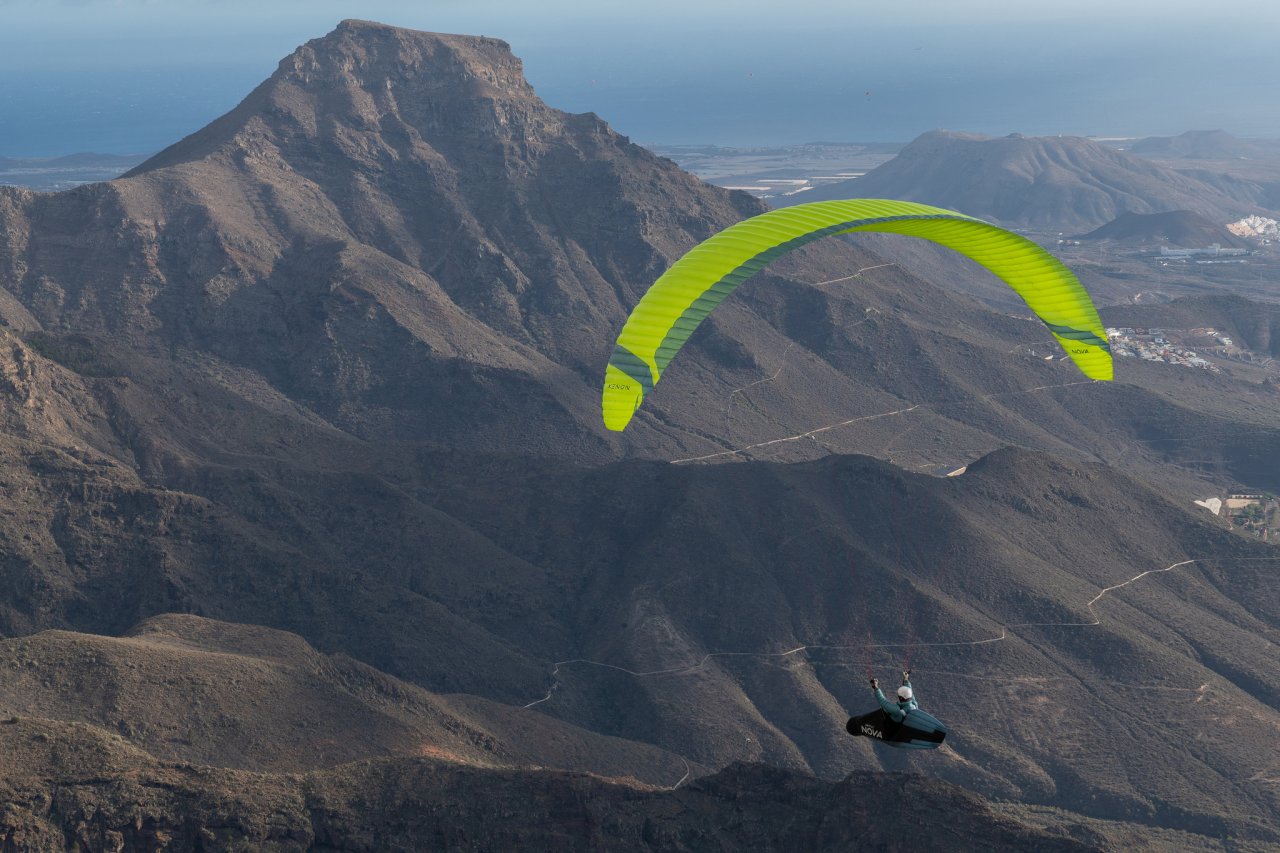
The NOVA XENON is an ultralight, EN/LTF D certified two-liner paraglider that epitomizes pure racing spirit. Designed specifically for highly experienced cross-country (XC) and hike & fly competition pilots, the XENON stands out with its advanced technical features and deliberate balance between raw performance and controlled handling. With 65 cells and a high flat aspect ratio of 6.7, this wing is optimized for maximum speed potential and minimal line drag, aimed at pilots who demand race-level efficiency under challenging alpine conditions.
Design and Technical Innovations
The wing’s architecture is tailored to excel in demanding hike & fly scenarios, providing stability in difficult launches, long flights through variable alpine air, and accuracy in landing on uneven terrain. A notable technical highlight is the extensive utilization of Nitinol rods on the upper surface. These rods bolster profile stability and performance consistency while resisting kinks, ensuring the wing retains an optimal aerodynamic shape over time.
Material choices reflect a sophisticated trade-off between durability and weight. Heavier, robust fabrics are strategically placed in high-load zones like the nose and trailing edge, while lighter Dominico 10D cloth is used extensively on the undersurface and much of the upper surface to maintain the overall ultralight character at just around 3.15 kg in the smallest size (17 m²). This avoids sacrificing robustness for weight savings, delivering a paraglider that withstands the rigors of competition flying.
The riser system underscores NOVA’s no-compromise approach to control and trim stability. Unlike wings that prioritize extreme lightweight with ultra-thin Dyneema cords, the XENON opts for 8 mm Kevlar webbing risers. Though slightly heavier, these risers provide excellent length stability and reduce twisting, enhancing consistent trim behavior and control feel. The adjustable Height-Adjustable B-handles (HAB) allow pilots to fine-tune the system perfectly to their size and harness geometry, improving handling in accelerated flight phases.
In-flight Performance and Pilot Feedback
Handling and Comfort
Pilot reviews commonly praise the XENON for its surprisingly accessible handling given its EN-D category and two-line design. Inflation and launch phases are described as clean and forgiving, even in moderately strong winds, making the wing manageable despite its competitive focus. In-flight, the paraglider feels rock solid and cohesive, providing reassuring feedback rather than nervous, twitchy behavior.
Brake input is lauded for a firm and precise feel, enhancing pilot confidence during tight turns and complex manoeuvres. The overall handling blend makes thermalling efficient and less fatiguing, an essential attribute for long XC missions.
Performance, Speed, and Stability
The XENON impresses with excellent glide performance, maintaining a strong glide ratio even when using full bar acceleration at speeds over 16 km/h faster, without excessive pilot input force. Its stability at high speeds makes it a favored choice among pilots transitioning from high-performance C-class wings, who commend its blend of raw speed and manageable control demands. The wing’s efficient aerodynamic profile and pitch stability enable confident, low-angle attacks on thermals and endurance along varied routes.
Behavior in Turbulence and Safety Aspects
Despite being a high-aspect, competition-level wing, the XENON exhibits relatively benign collapse behavior. Collapses occur rarely and are manageable without sudden or violent reactions; pilots note no tendency for deep stall or erratic re-openings. Asymmetric collapses remain supported and controlled, reassuring pilots amidst turbulent alpine conditions.
Rapid descent methods such as big ears performed via the B3 lines are stable and reopen swiftly. Spiral dives, which build significant energy due to the wing's EN-D classification, are considered easy to manage with good technique, enhancing pilot safety during emergency descent situations.
Target Audience and Use Cases
The XENON is unequivocally designed for highly experienced pilots with substantial XC flying and SIV (Safety and Incidence Training) backgrounds. It targets enthusiasts who prioritize speed, efficiency, and minimal weight in competitive race environments without completely sacrificing safety and practical durability. Its low pack volume and weight make it highly suitable for hike & fly races such as the Red Bull X-Alps, with top-level pilots trusting it in extreme alpine flying conditions.
However, this paraglider is not recommended for intermediate pilots or those lacking experience on high aspect ratio wings (≥ 6). The EN-D certification level means the wing demands respect and skill, with shops enforcing strict sales policies aimed at proven, competent pilots equipped to manage its flight dynamics.
Strengths Summarized
- Easy and forgiving inflation and launch for a high-performance two-liner.
- Rock-solid stability in flight with a cohesive and direct brake feel.
- Superior glide and efficient use of speed bar, sustaining performance without excessive pilot fatigue.
- Relatively tame and manageable collapses rare for wings in this class.
- Durable and carefully chosen materials including Nitinol rods and robust cloth in critical areas.
- Optimal weight and packability for hike & fly and competition.
- Highly stable and adjustable riser system increasing trim consistency and control.
Considerations and Limitations
- Only recommended for highly experienced pilots due to its EN-D classification and sensitive two-liner handling characteristics.
- Standard big ears through outer A-lines can be difficult and uneven; B3 ears are preferred for stable descent.
- Feedback in weak thermals may be less "talkative" than some ultralight competitors, requiring subtle adaptation in pilot technique.
- HAB handle adjustment is effective but not quick or lightweight, which may not please minimalists.
- The wing performs best when flown near the upper end of the certified weight range; lighter loading may increase tip collapses and reduce thermalling precision.
Conclusion
The NOVA XENON delivers on the promise of a "Pure racing spirit," making it a top contender in the performance two-liner category. Balancing ultralight construction, advanced materials, and pilot-friendly yet competitive handling, it provides a unique proposition for strong XC and hike & fly pilots seeking race-ready speed coupled with a more reassuring safety and durability profile than typical extreme ultralights. While demanding pilot expertise, it offers a noble flying experience valued highly within expert pilot communities and competitions.
For those eager to elevate their performance with a durable, precise EN-D wing designed for the rigors of mountain racing and long XC flights, the NOVA XENON stands as a proven choice combining the best of speed, stability, and control.
To explore further details about the NOVA XENON paraglider, visit the manufacturer's website and order your equipment through Paragliding.me.