

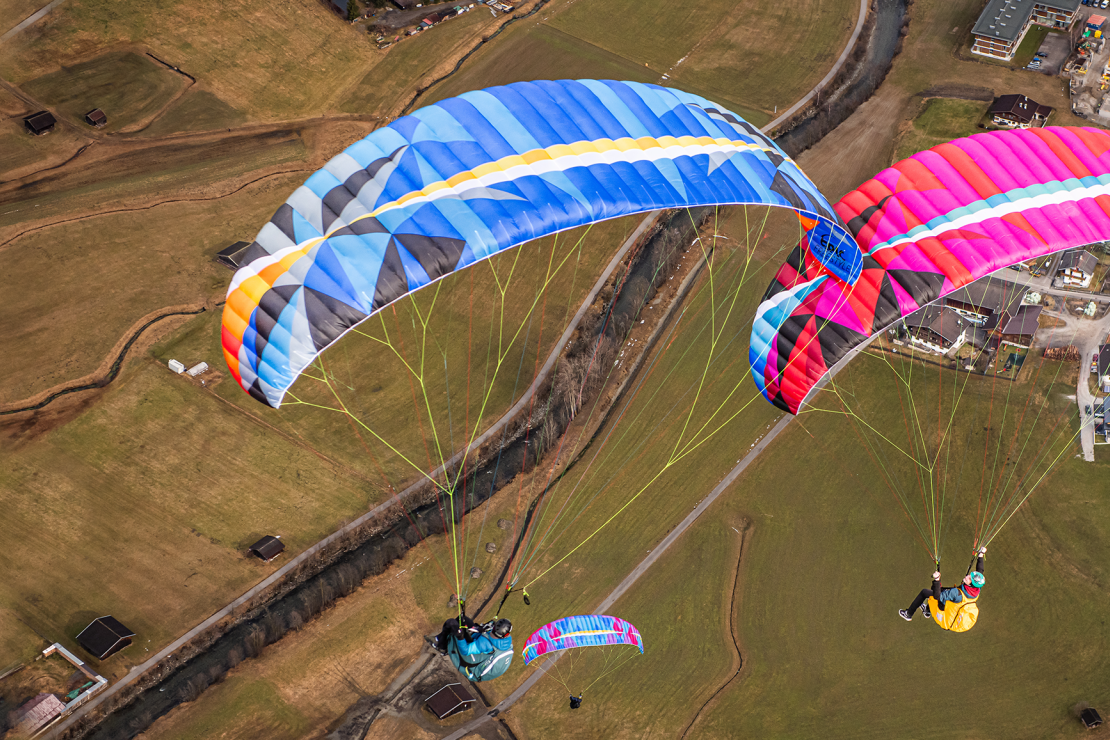
The Epic Freestyle is a paraglider specifically designed as a highly forgiving and confidence-building EN/LTF-B certified wing tailored for pilots keen to learn and progress in freestyle, SIV, and entry acro flying. It also remains fully capable of everyday use and cross-country (XC) flights, making it a versatile choice for dynamic pilots. This article provides a detailed analytical review based on the manufacturer's specifications and aggregated insights from instructors and pilot feedback.
Designed to target pilots wanting to safely practice technical acro manoeuvres—including stalls, spins, SATs, helicos, and complex transitions like spin-to-heli and SAT-to-heli—the Epic Freestyle offers a forgiving flight behaviour ideal when inputs or timing are imperfect. Rather than aggressive diving or overshooting after a manoeuvre, it behaves like a user-friendly EN-B wing that gently stops the shoot early, helping pilots avoid deep trouble. This characteristic is highly valued by acro instructors, many of whom prefer it as a training wing for new freestyle pilots.
Design and Technical Features
The wing comes in five sizes (XS through L) covering a certified pilot weight range of 50–125 kg, thus accommodating a broad spectrum of pilots. It features 42 cells with a moderate flat aspect ratio of 5.0, producing flat areas between 21 m² and 29 m² depending on size. Performance aligns with typical EN-B standards: a trim speed of approximately 38 km/h, top speed near 50 km/h, minimum sink around 1 m/s, and a best glide ratio of approximately 9:1. These figures make it competent for thermalling and XC without pushing towards more demanding high-performance wings.
Technological innovations prioritize pilot safety, feedback, and robustness without excessive weight. The BGD Feedback philosophy ensures progressive, clear communication to pilots through the wing, enhancing control and safety. The Chord Cut Billow (CCB) 3D shaping on the leading edge reduces wrinkles, improving accuracy and stability. Extensive testing confirms exceptional spiral behaviour where the wing tends to self-exit spirals, a safety-focused advantage over some other beginner wings. Its stable core and softer tips promote active piloting and anticipate deflations, while Snap Locks on brake handles provide secure, reliable control during ground handling and acro manoeuvres. Structural integrity is maintained with triple finger diagonals and optimized ribs for durability with weight savings.
Materials used—such as durable Porcher Skytex 38 g/m² fabric surfaces, 40 g/m² hard-finish internal structures, Kevlar/nylon risers, and quality Liros lines—reflect a design balanced towards longevity and consistent in-flight behaviour over ultralight weight aims. This emphasis fits the wing’s role as a sturdy training and freestyle workhorse rather than minimalist or specialized high-performance equipment.
Positioning and Use Cases
Epic Freestyle uniquely blends freestyle acro learning with daily flying and XC capabilities. It is explicitly pitched towards pilots wanting to develop dynamic wing control and acro basics under safe conditions without entering the higher risk or complexity levels of dedicated acro or high-end XC wings. When compared with the BGD Epic 2—its XC-oriented sibling—the Freestyle puts priority on handling skills, manoeuvre progression, and dynamic flying rather than fine rear-riser tuning or raw glide performance.
Manufacturers and instructors recommend flying within the certified weight range for optimal safety and performance characteristics, while experienced pilots might choose to fly slightly above range post-mastering basics to gain a quicker and sharper feel, but only under professional supervision.
Insights from Instructors and Pilot Feedback
Positive Themes
- Forgiving Flight Characteristics: Instructors highlight benign stall and spin exits with only mild shoot behaviour, allowing learners to practice acro manoeuvres with minimal risk and high confidence.
- Effective Progression Tool: Many schools rate it as an essential first freestyle wing, supporting progression from simple stalls and spins to complex helis and transitions.
- Versatility: It performs well both as an acro trainer and for thermalling or XC, making it a flexible wing for pilots combining leisure flying and acro training.
- Instructor Trust: Widely recommended by acro/SIV schools to ensure safe, effective technique development without the challenges of higher-energy wings.
Neutral and Cautionary Notes
- Limited Public User Reviews: The volume of widespread star-rated retail customer feedback is currently limited, with most commentary coming from instructors and specialist schools.
- Not a High-End Acro Wing: Intended as a stepping stone rather than for extreme acro or competition-level performance.
- Weight-Range Sensitivity: Proper sizing and adherence to weight recommendations are critical to maintain its signature forgiving character.
Balanced Summary
Strengths include: Exceptionally forgiving handling, especially during stalls and spins; mild exit behaviour reducing mishap risks; strong endorsement by trainers; versatility for both acro and XC flying.
Limitations comprise: Scarce extensive retail reviews, niche focus on learning rather than elite acro, and necessity for careful size/weight selection.
Practical Recommendations
For pilots embarking on freestyle, SIV, or entry-level acro training, especially those transitioning from EN-A or stable EN-B wings, the Epic Freestyle emerges as a top choice. It builds confidence through its forgiving nature while allowing skill advancement in dynamic manoeuvres. Engaging with reputable schools using this wing is advisable to maximize learning outcomes and ensure safety.
For deeper user experience insights, potential buyers are encouraged to reach out in specialized paragliding forums, social media groups, or directly consult SIV and acro schools that operate the Epic Freestyle extensively.
For more detailed information, visit the manufacturer's website and order your equipment conveniently through Paragliding.me.